
Med spa owner. Every month, another discount goes out. A text, a code, a little incentive to fill the book.
Over a full year, 233 of those offers got used. Then she looked at what her clients were actually redeeming.
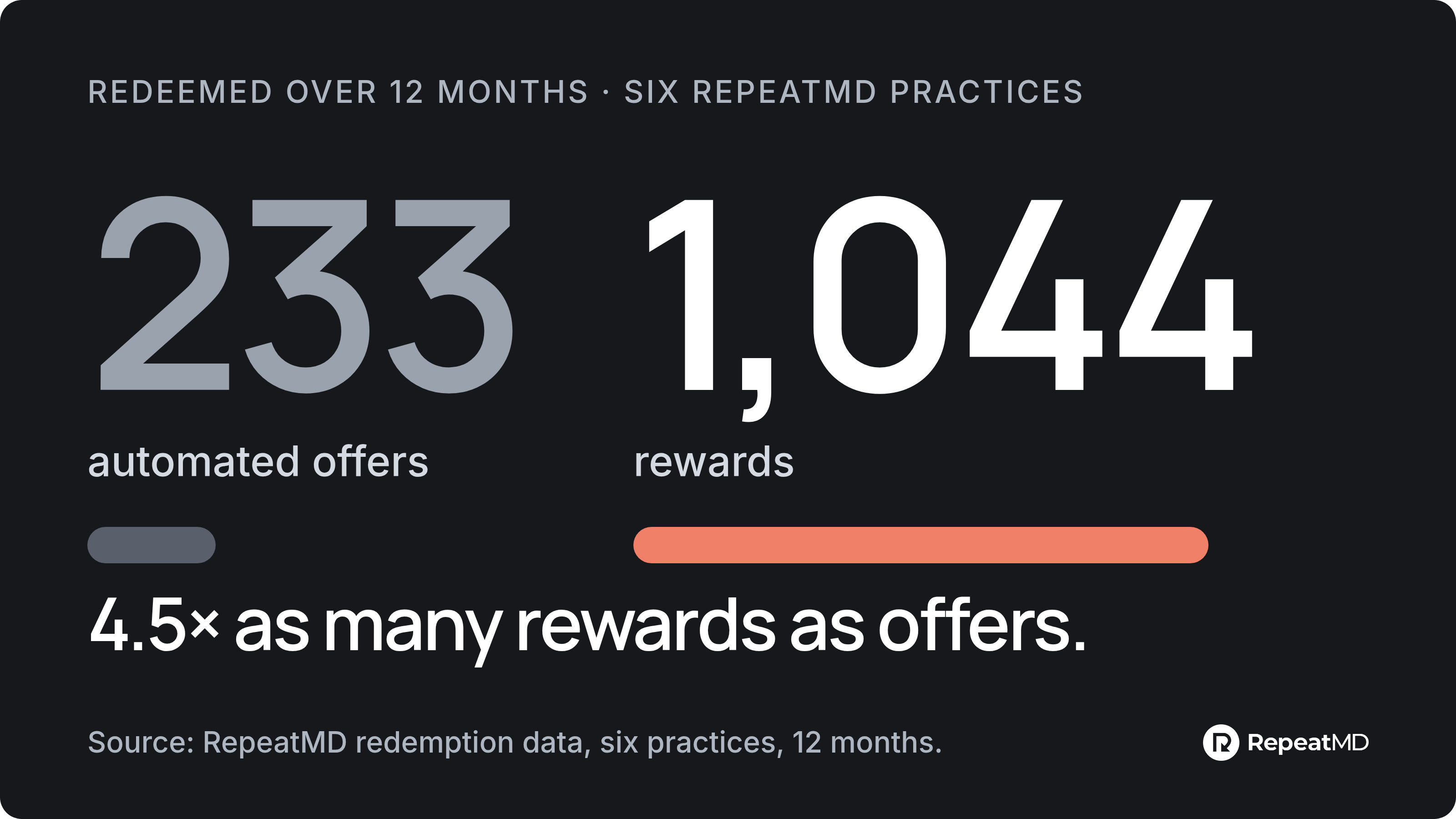
1,044 rewards. Redeemed for simply showing up.
That’s 4.5 times as many rewards as the discounts she’d been sending, combined across six RepeatMD practices over 12 months.
The short version
Clients redeemed 1,044 rewards and 233 automated offers in 12 months.
That’s 4.5× as many rewards as offers (1,044 ÷ 233).
Rewards won at all six practices, by margins from 2.5× to 18.3×.
Clients didn’t want a coupon. They wanted to feel like regulars.
What we counted
An automated offer is a discount the practice sent: a promotion, a code, a deal. A reward is something a client earned by coming in.
We compared how often each was actually redeemed over 12 months. Not messages sent. Not dollar value. Redemptions.
Six practices. Same story.
Maybe it was just her practice. So we looked at six. Rewards won at every one.
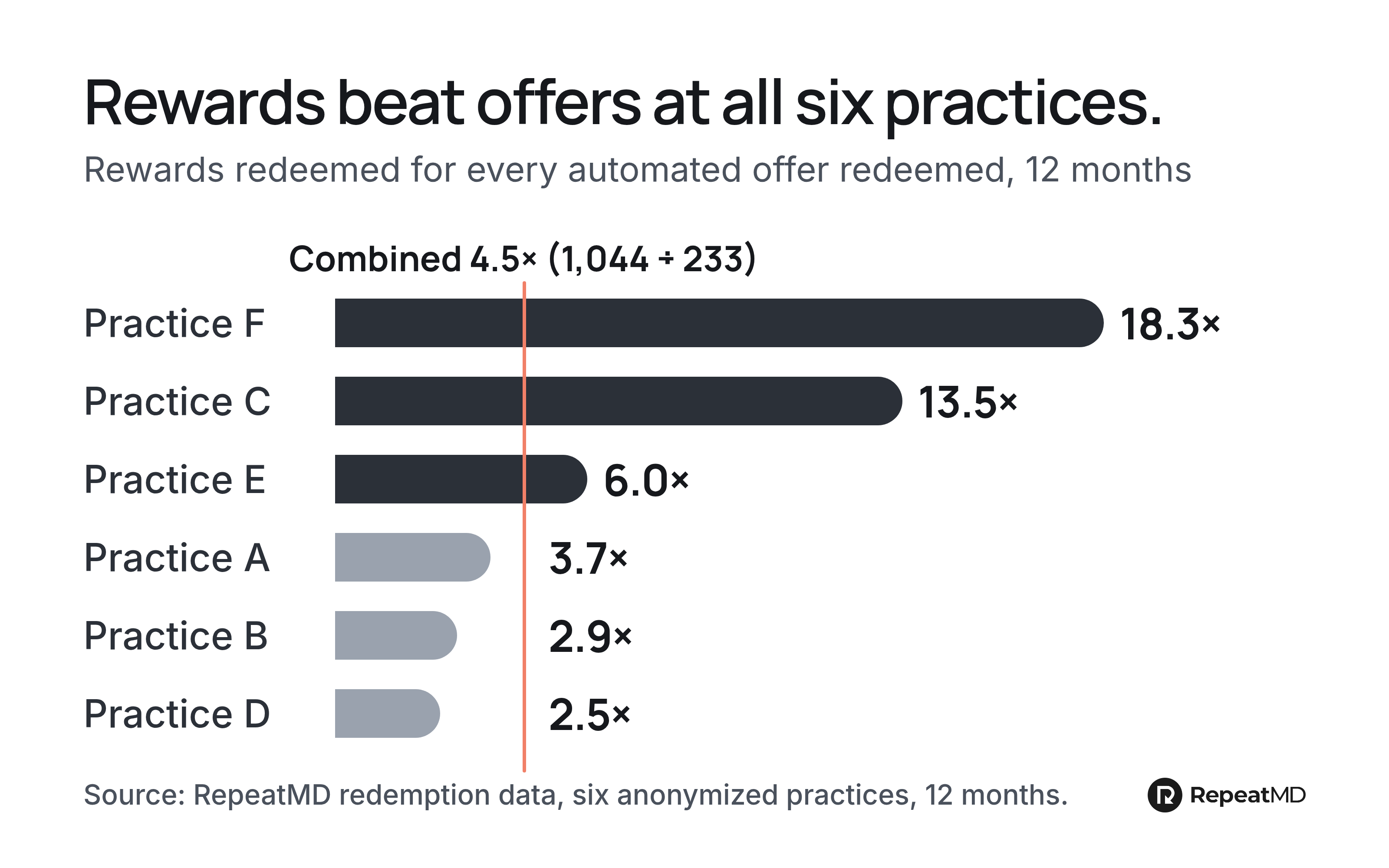
The gap ran from 2.5× all the way to 18.3×, the “eighteen to one” in our Practice Made Perfect episode. We’ve anonymized the practices as A through F. The pattern is what holds.
Why 4.5× and not the average?
4.5× is the combined total: every reward divided by every offer, across all six practices. Averaging the six ratios would let one small practice with a huge gap pull the number up. The combined figure is the honest one.
A reward is a relationship
A coupon is a transaction. Discounts still have a job: they fill a quiet Tuesday, launch a new treatment, or give someone a reason to book now. This data doesn’t say offers are useless.
It says that over a full year, what clients actually used was the reward for coming back. One message says the price is better today. The other says you belong here, and we noticed.
Four moves for your practice
1. Measure redemptions, not sends
Counting texts sent hides the number that matters. Pull a year of redemptions and put offers next to rewards.
2. Make rewards the habit and offers the accent
Keep running promotions. Just don’t let the everyday program that makes clients feel like regulars sit behind the next discount.
3. Know your own ratio
Across these six practices, the ratio ran from 2.5× to 18.3×. Your practice isn’t the average, so check your own number before you change anything.
4. Make “regular” visible
A rewards balance clients can see. A thank-you after a visit. A membership that treats them like insiders. That’s how “regular” becomes real.
See it in under a minute
This article is the companion to Episode 1 of Practice Made Perfect, RepeatMD’s Insights series for med spa owners and operators. The episode tells this story in under a minute. The numbers behind it are all here.
How does your practice stack up?
Curious about your own offers-to-rewards ratio? Book a demo and we’ll look at your year with you.
Source: RepeatMD redemption data. Combined 12-month totals across six RepeatMD practices; practices anonymized.
Ready to make this your best holiday season yet?
Book a Demo